
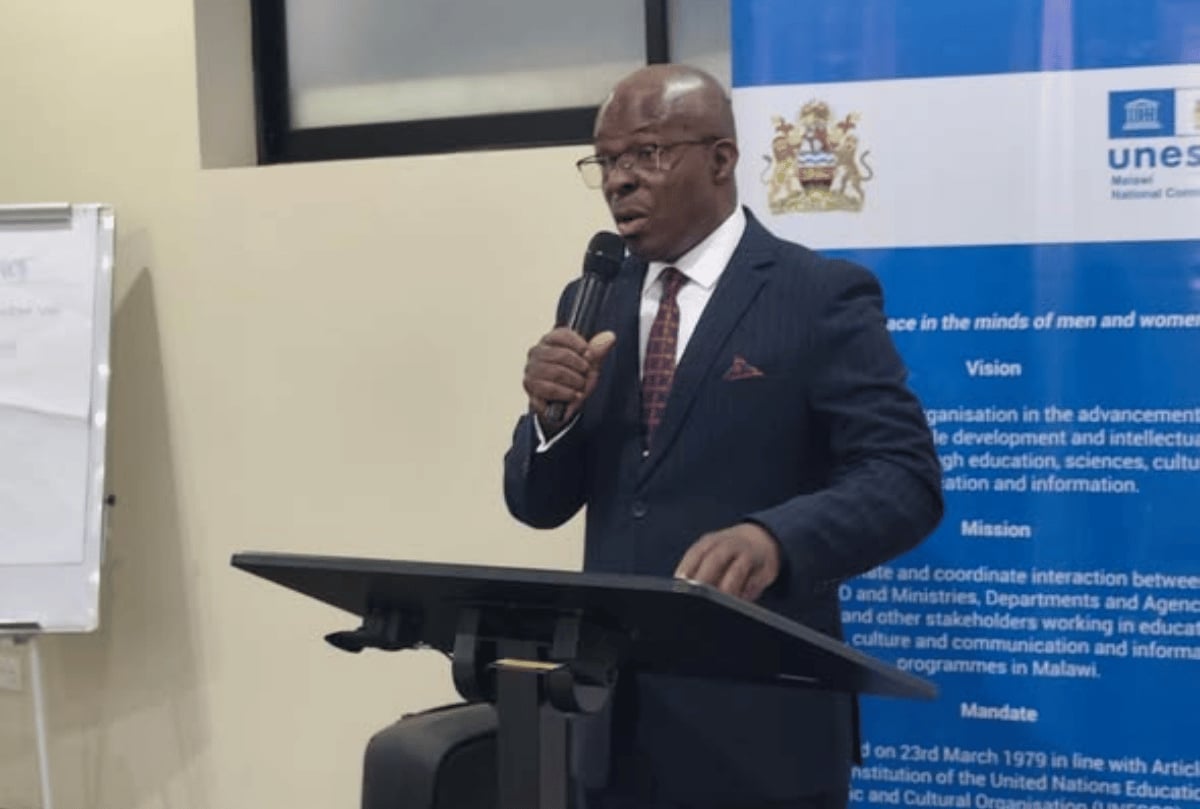
The Government of Malawi has validated its Artificial Intelligence (AI) Readiness Assessment Report — a foundational step toward a national AI strategy grounded in ethics, inclusion, and national development. The validation workshop, organised by Malawi's Ministry of Education with support from UNESCO's Regional Office for Southern Africa, brought together government officials, development partners, academia, and other stakeholders in Lilongwe.
Why a Readiness Assessment Matters
Before a country adopts AI across business, public services, and governance, it has to honestly evaluate where it stands. That's exactly what the Readiness Assessment Methodology (RAM) is designed to do — based on UNESCO's Recommendation on the Ethics of Artificial Intelligence, which all UNESCO member states (including Malawi and Zambia) have adopted.
Speaking at the workshop, Secretary for Education, Science and Technology Dr. Ken Ndala made the point clearly: while AI is already reshaping economies worldwide, "Malawi must first evaluate its current capabilities before implementing AI-driven solutions." The same logic applies to every African country looking to participate meaningfully in the AI era.
What the Assessment Examines
The report looks across four critical dimensions of national AI readiness:
Policy and regulation. Whether existing laws, institutions, and regulatory frameworks are robust enough to govern AI responsibly — covering privacy, cybersecurity, and human rights.
Digital infrastructure. The state of connectivity, electricity, and compute — the physical foundations without which AI cannot run.
Institutional capacity. Whether the public sector, universities, and industries have the skills and structures to design, deploy, and oversee AI systems.
Investment in science, technology, and innovation. Whether the country is funding the research, talent, and ecosystems needed to build AI that reflects its own realities — not just import solutions designed elsewhere.
What the Leaders Said
Dr. Ndala was direct: although Malawi has made progress in some aspects of AI preparedness, further investment is needed to ensure the country can fully leverage the technology's economic and social benefits.
UNESCO's Head of Social and Human Sciences, Dr. Abdul Rahman Lamin, framed the opportunity carefully. AI has significant potential to improve service delivery and transform lives — but it also raises important concerns around privacy, cybersecurity, and human rights. The assessment, he noted, is designed to evaluate whether institutions, policies, and frameworks are strong enough to support responsible deployment.
Four Lessons for Zambia
Zambia is at a similar inflection point. The country is finalising its own National AI Strategy, recently celebrated Team Zambia's place at the global finals of the 2026 AI for Good Global Summit, and is steadily building the training and infrastructure to support an AI-ready workforce. Malawi's approach offers four lessons worth carrying into that work:
1. Start with a baseline assessment. Before adopting AI across government or industry, a country needs an honest map of strengths, gaps, and risks. Zambia's National AI Strategy will be stronger if it's grounded in that same evidence base.
2. Build ethics into the foundation, not as an afterthought. UNESCO's Recommendation on the Ethics of AI is the most widely-adopted global framework on this topic. Anchoring Zambia's strategy to it sends a clear signal to citizens, partners, and investors.
3. Treat skills as national infrastructure. RAM's emphasis on institutional capacity is a quiet acknowledgment that AI adoption lives or dies on people. Programmes like our digital skills and AI literacy training are how Zambia turns policy into real capability — at every level, from secondary school to the civil service.
4. Invest in locally-relevant AI. The Malawi report specifically calls for AI systems that reflect the country's cultural and social context. For Zambia, that means solutions built by Zambians, for Zambian challenges — in education, healthcare, agriculture, and the creative economy.
What Comes Next
The validation of Malawi's AI Readiness Assessment Report represents a meaningful step toward a national AI strategy that promotes innovation while ensuring ethical governance and inclusive digital transformation. Zambia is on a similar path — and the lessons from our neighbours matter.
If you're a school, institution, or organisation that wants to be part of building Zambia's AI future, we'd love to talk. Visit our quote page to start a conversation about training, technology, or a digital lab for your community.